TWI – What is training within industry, and how does it work?
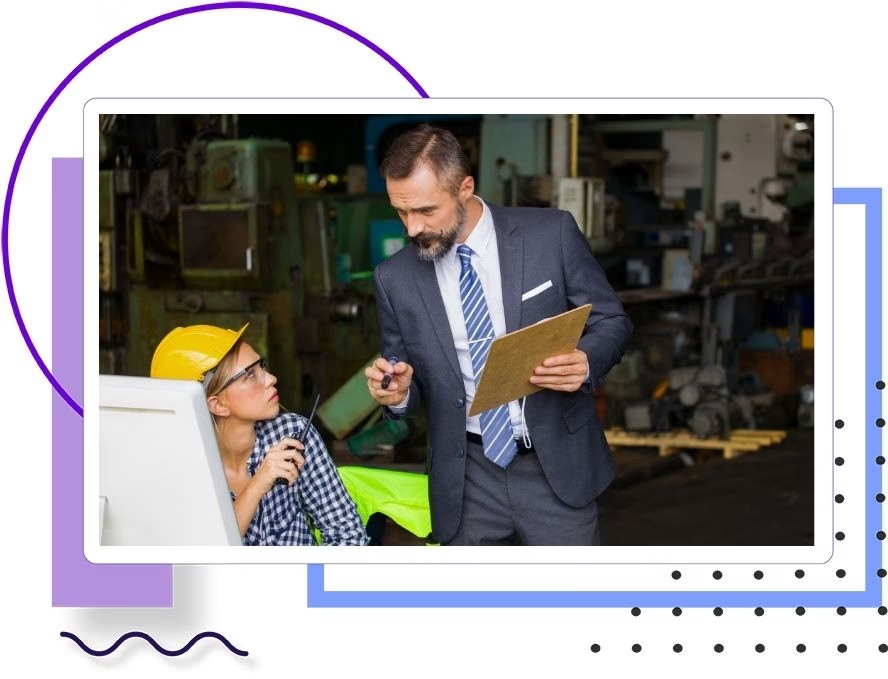
Efficient onboarding of new employees, maintaining high work standards, and effectively transferring knowledge are among the most important challenges in manufacturing facilities. TWI (Training Within Industry) offers a practical solution to these challenges a program that develops supervisors’ competencies and streamlines employee training methods. What is TWI, what areas does the program cover, and how is it implemented in practice?
What is TWI (Training Within Industry)?
Training Within Industry is a skills development program for supervisors that helps them effectively train employees, improve work methods, build strong team relationships, and ensure safety. The TWI method was developed with the industrial environment in mind, which is why it is particularly well–suited to the needs of managing production workers.
The TWI system focuses not only on what an employee should learn, but above all on how that knowledge should be conveyed and then verified to ensure the employee can apply it while working independently. The TWI instructor plays a crucial role here, as they are familiar with the standards for performing tasks, can present them appropriately, and monitor the employee’s progress.
Training Within Industry thus helps streamline the process of knowledge transfer within an organization, enabling the company to develop a consistent approach to instruction based on established standards.
How did the Training Within Industry program come about?
The origins of the TWI program date back to the United States during World War II. At that time, American industry had to significantly increase production, while many experienced workers were drafted into the military. Factories therefore began hiring people who had no prior experience in industrial work, including women and men of non–draft age.
There was a need to quickly and effectively prepare new employees to perform their tasks. The TWI program, created for this purpose, was designed to help supervisors effectively transfer knowledge and develop the skills of their employees.
After the war, Training Within Industry also spread to Japan. The principles applied in TWI such as leadership development, standardization, and work improvement influenced the development of the Japanese approach to production management, including solutions later adopted in the Toyota Production System.
What areas does TWI cover?
The Training Within Industry program is based on four pillars: Job Instruction, Job Methods, Job Relations, and Job Safety. What are their defining characteristics?
Employee training – TWI IP / Job Instruction
TWI IP focuses on developing employees’ instructional skills. In this area, the leader learns how to prepare and conduct hands–on on–the–job training. The supervisor demonstrates the correct way to perform a task, conveys the most important rules and guidelines needed to work safely, and then checks how the employee is doing when performing the task independently. The role of a TWI leader therefore includes both instruction and ongoing monitoring of progress.
TWI IP reduces the risk of individual instructors conveying the same knowledge in different ways. This pillar makes it easier to maintain standards and ensures that the onboarding process for new employees is more consistent.
Improving work methods – TWI MP / Job Methods
TWI MP teaches leaders to analyze the various components of a task, eliminate unnecessary activities, and look for opportunities to combine, reorganize, and simplify work. The goal of Work Methods Improvement is to achieve better results while making optimal use of available personnel, machinery, and materials. TWI MP can lead, among other things, to shorter task completion times, increased productivity, and a reduction in activities that do not add value to the process.
Employee relations – TWI RP / Job Relations
The TWI RP method teaches leaders how to prevent relationship problems and how to handle them when they do arise. In this area, emphasis is placed on gathering facts about the situation, analyzing possible actions and their consequences, making a decision, and subsequently evaluating its results.
TWI RP also emphasizes everyday communication communicating changes, providing feedback, and recognizing the work of individual team members. The goal is to create a friendly work environment and minimize the risk of conflicts.
Workplace safety – TWI BP / Job Safety
TWI BP focuses on preventing accidents and creating a safe work environment. Leaders learn to identify potential hazards, determine actions to mitigate them, and verify the results of the implemented corrective measures. In practice, workplace safety means properly training employees and ensuring they have access to up-to-date procedures, verifying required certifications, and monitoring training and examination schedules.
How does TWI work in practice?
The best way to illustrate how TWI works is through the example of onboarding a new operator to a production position. How does this work in practice?
What role does a leader play in Training Within Industry?
A TWI leader is primarily responsible for creating conditions in which employees can properly perform their assigned tasks. In a manufacturing facility, this role may be filled by, among others, foremen, supervisors, team leaders, or appropriately trained, experienced operators.
It is worth remembering, however, that a good specialist is not always a good instructor. A person who has been performing a given task for many years may carry out many of its elements automatically and have difficulty explaining them to a new employee. Therefore, a TWI instructor should, above all, demonstrate a thorough knowledge of the work standard and the ability to share information clearly. The trainer should demonstrate tasks in a practical way, point out the most important elements, explain their significance, and then observe the employee and respond appropriately to mistakes.
In Training Within Industry, a leader is not merely someone who “shows how to do something.” A TWI leader combines the roles of instructor, observer, and mentor who supports employee development.
When is it a good idea to implement TWI in a company?
It is worth considering implementing TWI in production, especially when the problems occurring in the processes are related to how knowledge is transferred, maintaining standards, or the team’s competencies. What kinds of problems are we talking about?
The varied ways in which instructors convey information
One operator highlights a specific element, another overlooks it, and a third demonstrates their own way of doing the job. The TWI method helps to base training on a single standard and minimize differences in how new employees are trained.
The long time it takes for new employees to become independent
The cause isn’t always the difficulty of the job itself. The problem may lie in the disorganized way knowledge is conveyed. Structuring the instruction allows you to focus the training on the most important steps and systematically monitor progress.
Recurrence of errors
The mere fact of participating in training does not in itself confirm that the skills have been acquired. The TWI system involves practical assessment of the employee and ongoing observation of how the work is performed, making it easier to detect irregularities and reduce the occurrence of errors.
The risk that experienced employees will retain knowledge for themselves rather than for the company
If only a few people know how to properly perform certain tasks, their vacation, sick leave, or departure from the company can become an organizational problem. Standardizing work processes and training new instructors facilitate the transfer of knowledge and help retain know–how within the company.
Differences between the instructions and how things actually work
Improving TWI Work Methods ensures that the standard is actually applied on the job, rather than existing solely as a document.
Problems with employee substitutability
The systematic transfer of knowledge and the development of skills among a larger number of people facilitate the creation of more well–rounded teams and reduce the process’s reliance on individual specialists.
The need to continuously train new employees due to high turnover
The more frequently a company conducts onboarding, the more important it is to ensure consistency. The TWI program helps create a consistent system in which the quality of the onboarding process remains the same regardless of who conducts the training.
How does noSilo support Training Within Industry?
The noSilo platform is a practical tool that simplifies the organization of TWI implementation. Our solution helps managers oversee training, competencies, knowledge, and communication in accordance with the principles of Training Within Industry. How does it work?
Creating personalized training paths
The noSilo platform allows you to create training paths tailored to an employee’s position, experience, and needs. In noSilo, materials can be made available in the form of instructional videos, presentations, e–learning modules, or best practices. Employees can also access these materials at their workstations, so after completing a training session, they can return to the materials and review the correct way to perform a task at any time. The solution supports TWI IP, facilitating the transfer of knowledge in accordance with established work standards.
Verification of acquired competencies
Tests and checklists allow you to assess knowledge and practical skills after each stage of training. Checklists can also be used during subsequent internal audits. This solution supports TWI IP by enabling the verification of training outcomes, as well as TWI MP by helping to identify deviations from standards and areas requiring improvement.
Effective competency management
noSilo’s intelligent competency matrices allow you to monitor the competency levels of individual employees and entire teams, identify gaps, and plan for further development. This also facilitates the development of job substitutes—a manager can check who possesses the skills needed to perform specific tasks. The matrices support TWI IP by identifying training needs, as well as TWI MP, facilitating the optimal use of team competencies and streamlining work organization.
Keeping knowledge up to date within the company and improving communication
The noSilo knowledge base centralizes instructions, documentation, and materials related to production, while the News module allows information to be shared with entire teams or specific employees. Automatic notifications can also serve as reminders to renew training, undergo medical exams, or fulfill other requirements. These solutions support TWI IP by providing access to up to-date instructions, TWI RP by streamlining communication, and TWI BP by making health and safety documentation available and monitoring deadlines for required training and medical exams.
Implementing TWI at a manufacturing facility helps streamline the knowledge transfer process, develop employee competencies, and maintain consistent work standards. The noSilo platform supports these objectives by facilitating the management of training and competencies, monitoring the team’s knowledge level, and providing employees with constant access to up–to–date instructions and materials.
FAQ
TWI and Lean Management are closely related, but they are not the same thing. Lean Management is a broader approach to management, focused on eliminating waste and continuously improving processes. TWI, on the other hand, focuses on developing leadership skills, standardizing work, and effectively transferring knowledge. Implementing TWI can therefore support the goals of Lean Management.
No. Training Workers (TWI–IP) is just one area of the program. Training Within Industry also includes Improving Work Methods (TWI–MP), Relations with Workers (TWI–RP), and Workplace Safety (TWI–BP). The TWI system therefore develops a broader set of competencies needed by leaders.
TWI was developed with the manufacturing industry in mind and remains closely associated with manufacturing to this day. However, these principles can also be applied in other organizations that have repetitive processes, work standards, and a need to effectively transfer knowledge and develop employee competencies.
Standard training may simply involve presenting a task and conveying the most important information. TWI structures the entire process: from preparing the standard and the trainer, through demonstration and independent task completion, to assessing skills and ongoing monitoring of work.
Bibliography:
https://twi.org.pl/o-twi/;
https://pl.wikipedia.org/wiki/Training_Within_Industry;
https://pmc.ncbi.nlm.nih.gov/articles/PMC10725242/.


For years, he has been exploring how technology can tangibly support people at work - especially in manufacturing environments. He develops technologies and content that help companies reduce the time it takes to onboard new employees, better manage team competencies, and transfer knowledge more effectively.
In his writing, he combines practical language with an accessible style, demonstrating that digitalization in factories is not just a trend but delivers tangible benefits: lower turnover, higher quality, and greater efficiency. He draws inspiration from daily conversations with clients and observations from production facilities, ensuring that every article is grounded in the real needs and challenges of the industry.