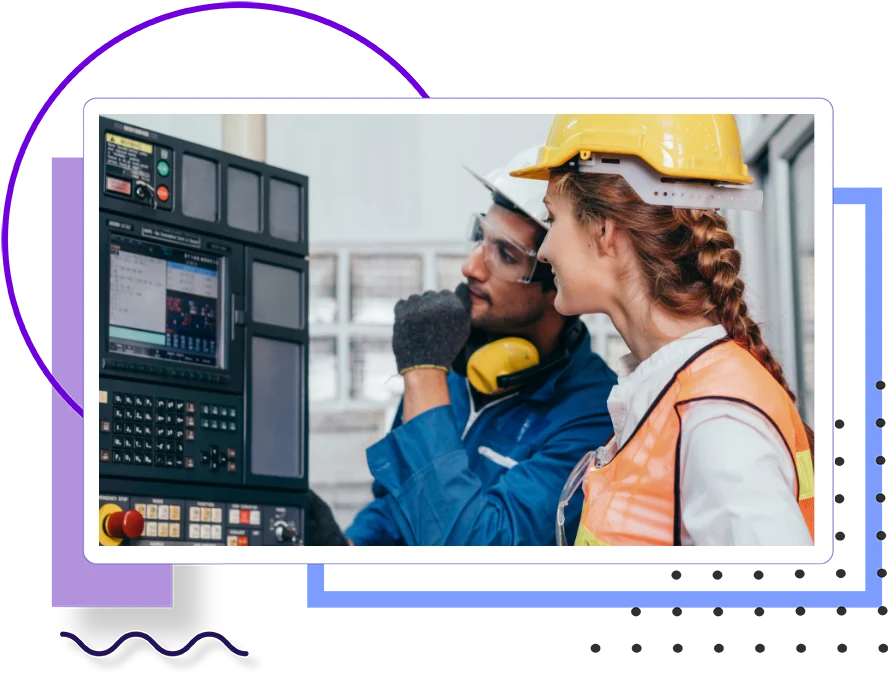
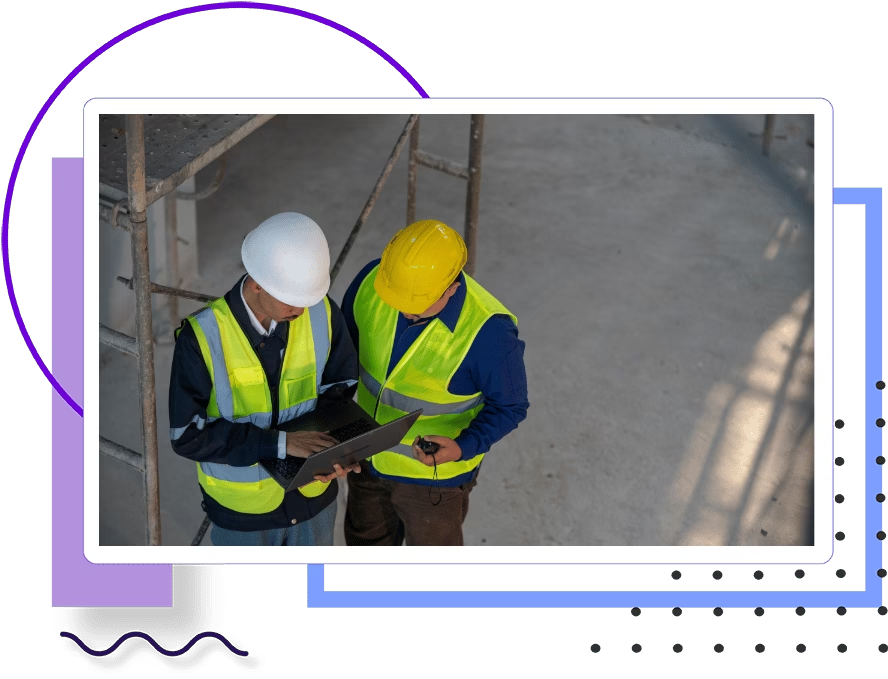
Production operator onboarding – a step-by-step guide
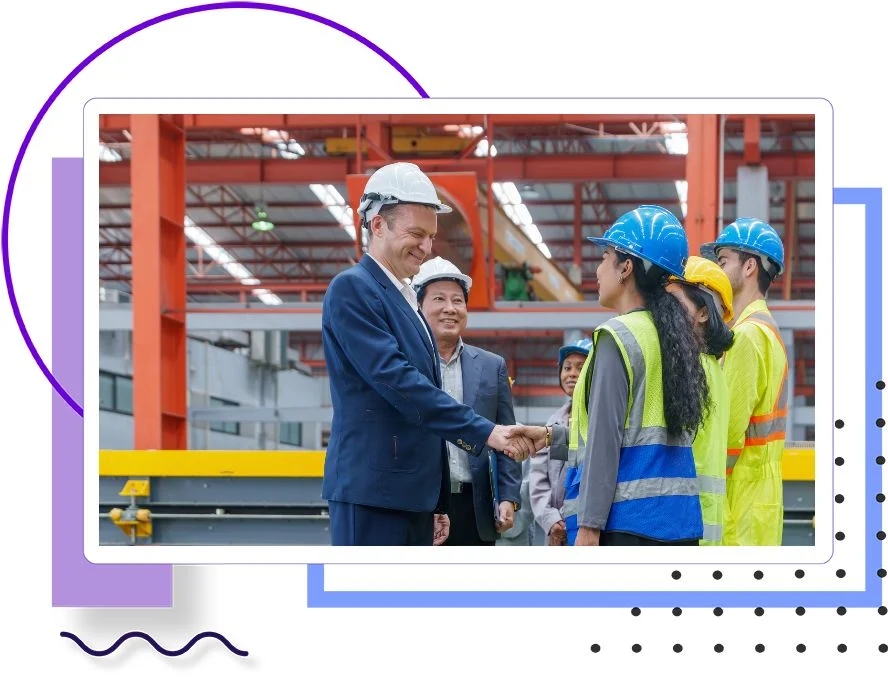
Onboarding a production operator requires proper preparation and systematic monitoring of progress. The primary goal of onboarding is to prepare the new employee to work safely, independently, and effectively. How can you plan a production operator’s onboarding and carry it out step by step?
What is production operator onboarding?
Production operator onboarding is a comprehensive process for introducing a new employee to work in a production facility. It includes, among other things:
- administrative procedures and familiarization with the company’s organization,
- health and safety training,
- training in machine operation,
- familiarization with technological processes,and the gradual development of practical skills.
Unlike a one-time on-the-job training session, the onboarding of production employees is a multi-stage process. It does not end after the basic information regarding job duties has been provided—it continues until the operator reaches the required level of competence and is prepared to perform tasks independently.
Why is onboarding a production operator so important?
The importance of properly onboarding new employees in production is confirmed by the results of the study *The State of Onboarding Deskless Employees 2022*, conducted in April 2022 by TalentCards and When I Work. The survey included 900 individuals responsible for onboarding manual workers at U.S. companies in the manufacturing, construction, transportation, logistics, and energy sectors. Among the respondents were 290 representatives from the manufacturing sector.
The results for manufacturing companies show that:
- 51% indicated that new hires lack the skills necessary to perform their assigned duties.
- 41% of respondents reported that an accident related to inadequate employee training had occurred at their companies.
- 25% estimated the cost of onboarding a single employee at over $5,000.
- 10% admitted that employees do not have access to training materials after completing the onboarding process.
These data show how important it is to properly train operators for their jobs both from the perspective of safety and required competencies, as well as the costs incurred by the company.
How do you develop an onboarding plan for a production operator?
The onboarding plan outlines the scope of required knowledge, the sequence of training sessions, and the method for assessing progress.
A well-prepared implementation plan should include:
- Defining required competencies – determining which skills and qualifications are necessary to perform the job in a given position.
- Developing a training schedule – planning the successive stages of training, from basic safety rules to the practical operation of machinery.
- Preparing training materials – compiling up-to-date job instructions, SOPs, technical documentation, and video materials.
- Assigning a mentor – designating an experienced employee responsible for sharing knowledge and supporting the operator.
- Establishing evaluation criteria – defining methods for assessing knowledge, practical skills, and readiness to work independently.
How to onboard a production operator, step by step?
It is helpful to divide the implementation of a production operator into five stages. What does each stage involve?
How can you tell if a production operator is ready to work independently?
Completing the onboarding process requires verifying the knowledge and practical skills acquired.
The evaluation should primarily take into account:
- knowledge of health and safety rules and the proper use of safety equipment,
- the ability to perform tasks correctly in accordance with instructions,
- compliance with quality standards,
- the ability to identify irregularities and respond appropriately,
- the ability to perform assigned tasks without constant support from an instructor.
Knowledge tests, checklists, and observation can be used to assess competencies. It is advisable to document the results of the assessment. This provides the supervisor with confirmation that the employee has completed each stage of training and allows the supervisor to make an informed decision about whether to allow the employee to work independently.
What mistakes should you avoid when onboarding a production operator?
Poorly organized onboarding can prolong the onboarding process, increase the number of errors, and burden experienced employees with the need to constantly provide support.
The most common problems include:
- Lack of a uniform implementation plan – individual employees acquire varying levels of knowledge, and some training stages are skipped.
- Lack of standardization in instruction – instructors convey information in different ways, which leads to the establishment of different methods for performing the same tasks.
- Outdated training materials – operators learn from instructions that do not reflect the current process flow.
- Increasing autonomy too quickly – employees begin performing tasks without sufficient practical preparation.
- Lack of skill verification – completion of training is treated as confirmation of competence, even though skills have not been tested in practice.
How does noSilo support the onboarding of production operators?
The noSilo platform allows you to organize and partially automate activities related to training management, documentation, and competency assessment.
The software enables you to create digital onboarding paths, assign training programs, and monitor the completion of each stage of the onboarding process. Checklists and tests allow you to verify the completion of individual onboarding stages and the knowledge acquired by employees. Competency matrices, in turn, collect information about existing skills and competency gaps, facilitating the planning of further training.
Another important feature of noSilo is its knowledge base, which contains job instructions, procedures, and video tutorials. Operators can access these directly at their workstations to refresh their memory on the correct way to perform tasks.
The noSilo app lets you:
- managers – to maintain better control over the implementation process,
- trainers – to use standardized materials,
- new employees – to have constant access to the knowledge they need.
A properly planned onboarding process for production operators helps shorten the onboarding time and better prepare employees to perform their duties independently. With noSilo, the entire process becomes more organized and easier to monitor.
FAQ
The effectiveness of onboarding can be assessed based on the time needed to become self-sufficient, test results and practical evaluations, the number of quality defects, and the completion of the training plan. Competency matrices and feedback from operators and instructors are also helpful.
Several people are usually responsible for onboarding. The HR department coordinates the paperwork, the supervisor oversees the onboarding process, and a designated instructor or mentor conducts the hands-on training. Those responsible for occupational safety and health and quality are also involved in the process.
The duration of the onboarding process depends on the complexity of the position, the type of machines operated, and the employee’s experience. The process can take anywhere from a few weeks to a few months. The most important criterion for completing the process should be the attainment of the required competencies, not the passage of a specific amount of time.
No. Digital materials can support the learning of procedures, safety rules, and machine operation, but they do not replace the required on-the-job instruction or hands-on training under the supervision of an instructor. The best results come from a combination of both forms of training.
Bibliography:
https://onlinelibrary.wiley.com/doi/10.1002/joom.1159;
https://www.talentlms.com/research/onboarding-deskless-workers-stats;
http://integlearn.toolingu.com/globalassets/tooling-u-sme/resources/white-papers/cost_of_turnover_report_v3.pdf?_t_hit.id=SME_Models_Pages_TuGeneralContentPage%2F_d63f06ff-70bb-4b3c-b0af-7e8b36764bc0_en&_t_hit.pos=3&_t_tags=language:en,siteid:fd85c5e0-d0e4-4d0d-b650-ece2fb84a726&.


For years, he has been exploring how technology can tangibly support people at work - especially in manufacturing environments. He develops technologies and content that help companies reduce the time it takes to onboard new employees, better manage team competencies, and transfer knowledge more effectively.
In his writing, he combines practical language with an accessible style, demonstrating that digitalization in factories is not just a trend but delivers tangible benefits: lower turnover, higher quality, and greater efficiency. He draws inspiration from daily conversations with clients and observations from production facilities, ensuring that every article is grounded in the real needs and challenges of the industry.